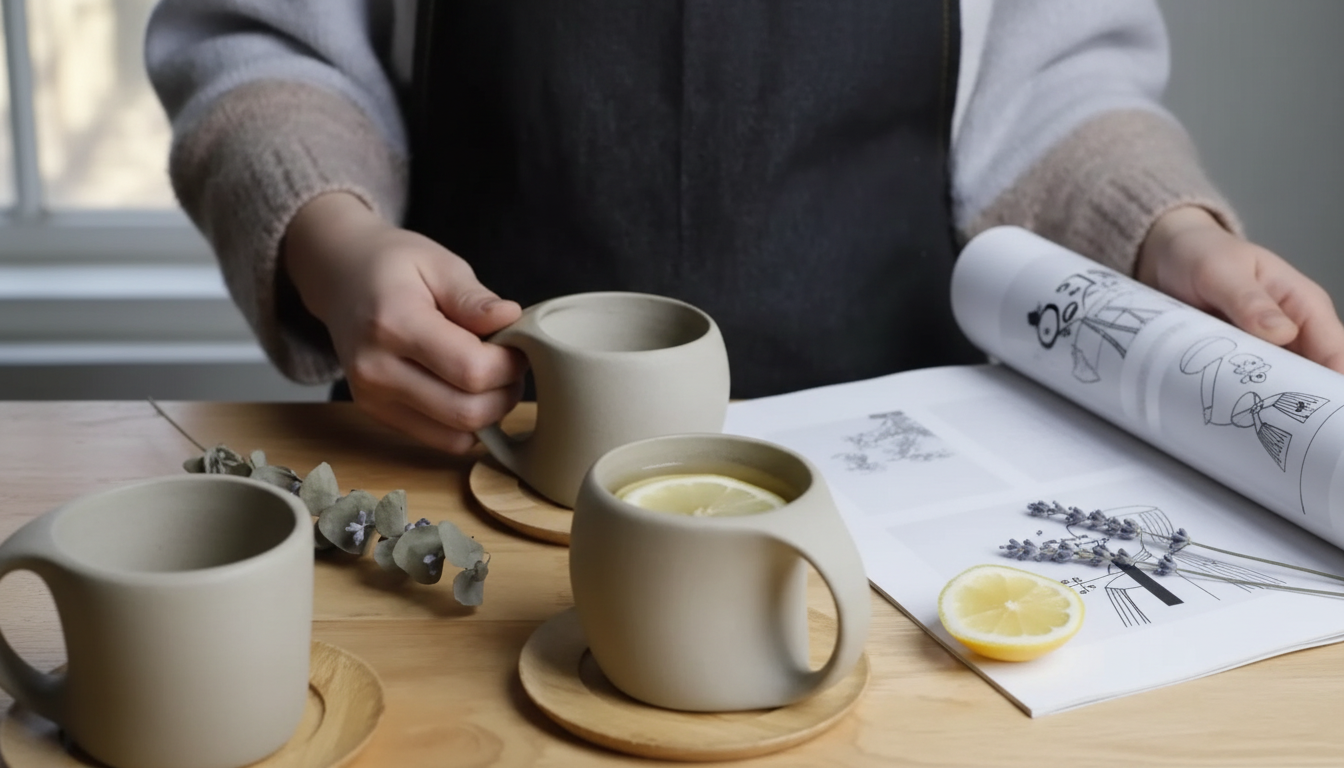
Many Japanese “mugs” are handleless because they’re designed to be held differently than a large Western coffee mug. In Japan, everyday tea culture centers on smaller vessels—like yunomi (tall tea cups) and chawan (tea bowls)—that are meant to be cradled in the hands, sipped in smaller amounts, and enjoyed warm rather than piping hot. The lack of a handle isn’t a flaw; it’s a feature that matches how the drink is served and appreciated.
Handleless cups are usually smaller and lighter, which makes them comfortable to hold without straining the wrist. Since Japanese green tea is typically brewed at lower temperatures than boiling water, the cup is warm but often still pleasant to touch. Many pieces also use thicker ceramic walls that help buffer heat and keep the drink at a steady temperature.
When a cup is intentionally small, adding a handle can make it feel bulky or off-balance. A clean cylinder or bowl shape stacks and stores easily, and it’s less likely to snag or chip in a crowded cabinet.
Japanese tea customs often involve holding the cup with one or two hands, a gesture that can feel more mindful and respectful. A handle can interfere with that two-handed hold, while a smooth cup encourages a natural cradle grip. This is especially true for styles inspired by tea ceremony aesthetics, where tactile feel and form matter as much as function.
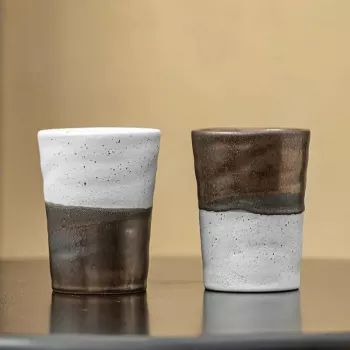
Handleless shapes give potters more surface area for glaze effects, carving, and subtle variations in profile. They also reduce weak points: handles are among the most common parts to crack or break during firing, shipping, or daily use. A handleless silhouette can be both minimalist and durable.
For a deeper dive into cup types, cultural context, and practical use, visit the full guide on why Japanese mugs don’t have handles.
A yunomi is an everyday Japanese tea cup used most often for green tea. It’s typically taller than it is wide and designed to be comfortably held in the hands while sipping.









Leave a comment