Turning “random fridge items” into satisfying meals gets easier with a simple system: take inventory, match flavors, choose a method, and build a short shopping list only when needed. Once the workflow becomes a habit, weeknight decisions speed up, groceries last longer, and the kitchen feels less chaotic—without turning meal planning into a second job.
Most “nothing to eat” moments aren’t caused by an empty fridge—they’re caused by friction. A few common culprits show up in almost every kitchen:
A reliable process matters more than perfect recipes. On busy days, quick rules beat complicated plans because they reduce the number of decisions you have to make. A checklist-style approach creates consistency: inventory first, then decide, then shop only for the missing piece.
For food safety, remember that storage time matters as much as creativity—especially for leftovers and opened items. When in doubt, check trusted guidance from the USDA Food Safety and Inspection Service and the FDA.
This quick workflow is designed to be repeatable. It works whether you’re feeding one, feeding a family, or simply trying to use up produce before it wilts.
In under three minutes, list what you have in five buckets: proteins, vegetables, starches, sauces/condiments, and “almost-gone” items that need priority (half a tub of yogurt, a soft bell pepper, leftover roasted chicken). Put the “use first” items at the top of your list.
Pick the meal shape that fits your mood and what you own: bowls, salads, pasta, soup, stir-fry, sheet-pan meals, tacos/wraps, or breakfast-for-dinner. A format turns scattered ingredients into a plan.
Match the method to the time you actually have: no-cook, one-pan, oven roast, or a slow simmer. On a hectic night, “one pan + one sauce” is often the winning formula.
Choose one flavor lane using what’s already living in the door shelves: Mediterranean (lemon, herbs, olive oil), comfort (cheese, butter, garlic), spicy (hot sauce, chili flakes), herby (dill, parsley), curry-style (curry paste/powder, coconut milk), citrusy (lime, vinegar), or cheesy (parmesan, cheddar).
Look for the single purchase that makes everything click—tortillas, broth, a lemon, salad greens, or eggs. Limiting the list keeps costs down and prevents the “buy five things to use one thing” trap.
| Base format | Works well with | Flavor boosters that usually exist in the kitchen | One optional add-on to buy |
|---|---|---|---|
| Stir-fry | Any veg + protein + leftover rice/noodles | Soy sauce, garlic, ginger, sesame oil, chili flakes | Frozen mixed veg or noodles |
| Sheet-pan roast | Veg + sausage/chicken/tofu + potatoes | Olive oil, paprika, Italian herbs, mustard | Lemon or feta |
| Pasta shortcut | Any veg + canned beans or chicken | Jarred sauce, pesto, garlic, parmesan, red pepper | Fresh spinach |
| Soup / ramen-style bowl | Broth + veg + protein + noodles | Miso/bouillon, soy sauce, scallions, vinegar | Eggs or mushrooms |
| Tacos / wraps | Cooked protein + crunchy veg + sauce | Salsa, yogurt/sour cream, hot sauce, lime | Tortillas |
The best meal plan is the one you’ll actually use—and organization reduces the mental load required to get there.
If you’re aiming for balanced plates, a simple visual guide can help you distribute veggies, protein, and carbs without overthinking it; the Harvard Healthy Eating Plate is an easy reference.
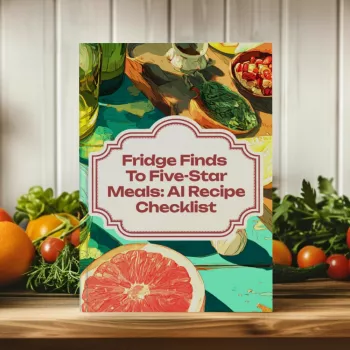
If the hardest part is turning “I have stuff” into “I have a plan,” a guided template can help. Fridge Finds to Five-Star Meals: AI Recipe Checklist (Digital Download) is built around an inventory-first approach: capture what’s in the fridge, then turn it into cookable meals with minimal extra shopping.
Structured inputs—what you have, what must be used first, time, servings, preferences, and equipment—lead to meal ideas that match real constraints. It also makes it easier to produce a short shopping list and reduce waste by prioritizing perishable items.
Start with items closest to expiring: cooked leftovers, leafy greens, opened dairy, and cut produce. Next list proteins, then vegetables, then pantry staples and sauces that can tie everything together.
Yes—prompts and templates remove the guesswork and make the process repeatable. It reduces decision fatigue and helps keep shopping targeted to only what completes your meals.









Leave a comment