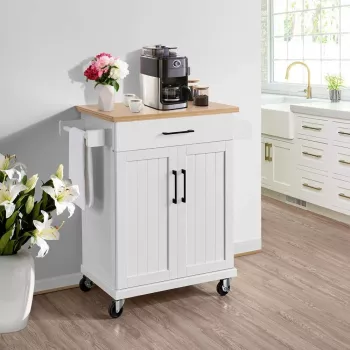
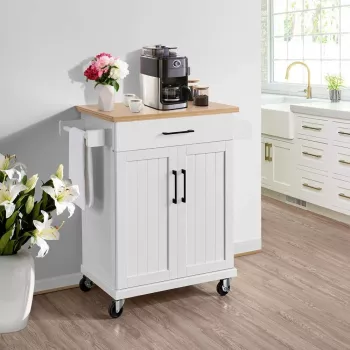
A kitchen cart with drawer storage adds a flexible work surface and keeps everyday tools close at hand. With a compact footprint and mobile design, it can serve as a prep station, coffee bar, baking hub, or pantry overflow—while the drawer and lower storage help reduce countertop clutter. The result is a kitchen that feels easier to use day to day, especially when you’re juggling multiple dishes or working in a smaller layout. For more guidance, see VINGLI Rolling Kitchen Island Cart with Storage Cabinet … – TTCSI.
A simple rolling cart can add surface area, but a drawer changes how the cart functions in real life. Instead of piling tools on top (or migrating them to the nearest counter), you get a contained, easy-to-reach zone for the items you grab constantly. For further reading, see Kitchen Island Storage Cart.
The best part of a cart is that it can change roles as your routines change. The drawer helps each setup feel intentional rather than temporary.
Not all kitchen carts are built the same. A quick checklist helps you choose a cart that’s comfortable to use, stable while you work, and easy to keep clean.
| Kitchen situation | Recommended cart focus | Drawer use ideas | Lower storage use ideas |
|---|---|---|---|
| Narrow galley kitchen | Slim profile, easy-rolling casters | Utensils, towels, wrap/foil | Stacked bins, cutting boards, small pantry items |
| Frequent meal prep | Larger top surface, locking wheels | Knives (with guards), peelers, timers | Mixing bowls, sheet pans, food containers |
| Coffee/tea corner | Moderate top space, tidy look | Filters, pods, stirrers | Mugs, canisters, kettle accessories |
| Baking and desserts | Sturdy top, storage for tools | Measuring sets, piping tips, spatulas | Flour/sugar bins, mixer bowls, baking pans |
A rolling cart looks and works best when it’s “parked with purpose.” Small placement tweaks can make it feel like part of your kitchen plan instead of an add-on.
With light upkeep, a kitchen cart stays sturdy, sanitary, and good-looking even with daily use. For general kitchen cleaning guidance, see the American Cleaning Institute’s kitchen cleaning tips. If your cart is used for food-adjacent tasks in a busy environment, it can also help to understand common durability and cleanability considerations referenced by organizations like NSF International.
If the goal is added workspace plus a smarter place for frequently used tools, a cart with a drawer is the sweet spot. The Kitchen Cart with Drawer & Storage is a balanced option for adding both a handy drawer and additional storage without taking over the room. It works well as a prep station, coffee setup, or flexible serving cart—especially when the drawer is reserved for the items you reach for multiple times a day.
Use the drawer for small, frequently used tools like utensils, towels, wrap/foil, and can openers so they’re easy to grab during prep. Put heavier or bulkier items—mixing bowls, small appliances, or pantry bins—on the lower shelves to keep the cart stable and easier to roll.
Locking casters help prevent the cart from shifting while chopping, mixing, or kneading, and they make the cart safer around kids and pets. It’s ideal to lock at least two wheels so the cart stays parked when you need a steady work surface.
Leave enough room to walk comfortably and to open nearby cabinet doors, drawers, and appliance doors without interference. In tighter kitchens, a slimmer cart and a consistent “parking spot” help keep traffic flow smooth.








Leave a comment