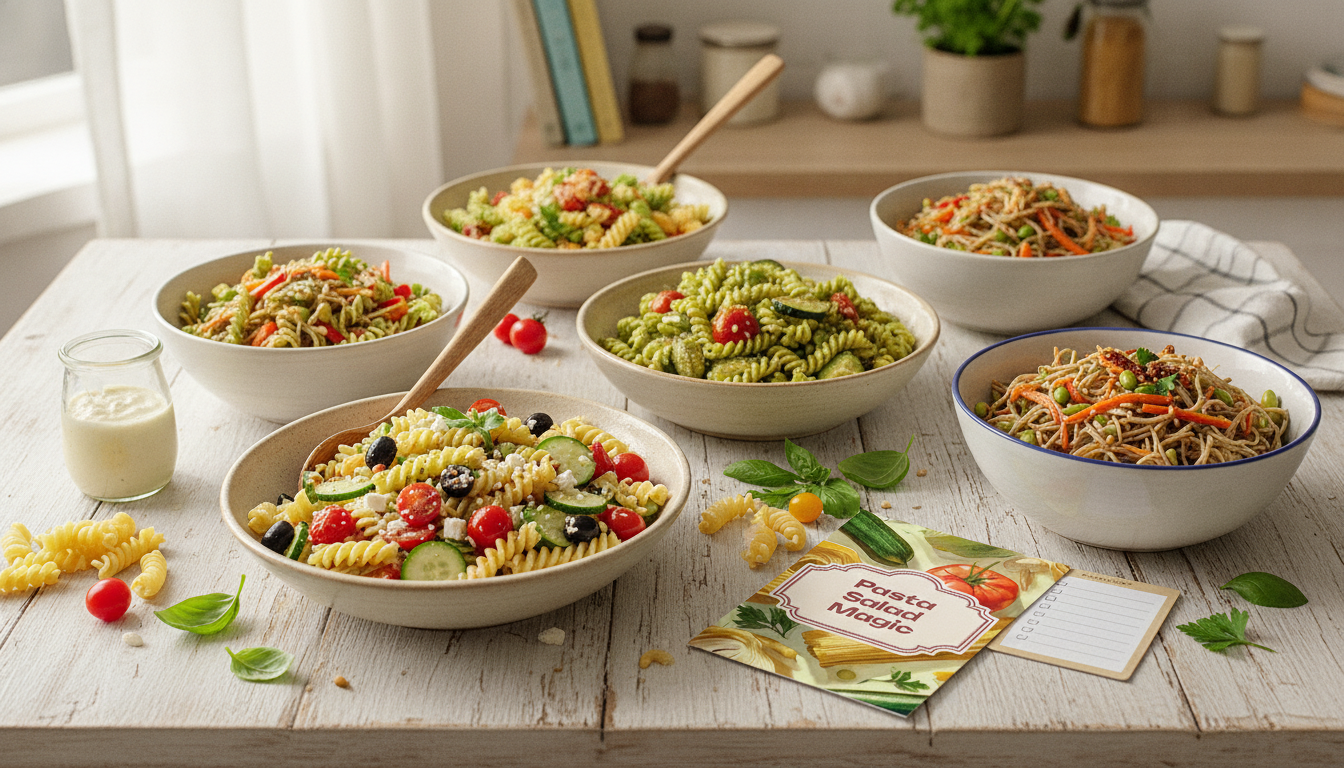
Pasta salad gets dramatically easier when the building blocks are clear: the right pasta shape, a balanced dressing, and add-ins that stay crisp and flavorful. The goal isn’t a single “perfect” recipe—it’s a reliable method you can repeat for quick weeknight bowls, picnic-ready sides, and clean-out-the-fridge lunches. If you like having everything in one place, the Pasta Salad Magic digital guide (printable download eBook + checklist) is designed for fast reference: base steps, dressing combinations that hold, and theme templates you can remix.
Go for shapes with ridges, curls, or pockets: rotini, farfalle, penne, and shells are reliable. Cook just past al dente so it stays pleasantly tender after chilling. Rinse only when you need rapid cooling or you’re making a very mayo-forward salad and want to reduce stickiness.
Salting the pasta water is your first layer of seasoning. For quick cooling, spread drained pasta on a tray. If it must sit before dressing, toss with a tiny bit of oil to prevent clumping—but don’t overdo it or the dressing may slide off later.
The most craveable pasta salads hit multiple notes at once: chewy pasta, crisp vegetables, a creamy or savory element, and a bright “punch” (acid, herbs, pickles, pepperoncini). If one bite tastes flat, it’s usually missing salt, acid, or fresh herb lift.
Season the pasta while it’s still warm (a little salt and a splash of vinegar or lemon goes a long way), then adjust after chilling. Cold foods need more salt and acid than warm foods to taste equally bold.
A 30–120 minute chill helps flavors mingle. Reserve 2–3 tablespoons of dressing to refresh right before serving, especially if the pasta has absorbed a lot.
| Component | Target Amount (per 4 servings) | Reliable Options | Quick Tips |
|---|---|---|---|
| Pasta | 8 oz dry | Rotini, farfalle, penne, shells | Cook slightly past al dente; cool before adding delicate greens |
| Crunch | 2–3 cups | Cucumber, bell pepper, celery, radish | Salt watery veg lightly, then drain to avoid dilution |
| Protein | 1–2 cups | Chicken, tuna, chickpeas, salami, tofu | Keep pieces bite-size for even distribution |
| Creamy/Umami | 1 cup | Feta, mozzarella pearls, parmesan, olives | Add strong ingredients gradually to avoid overpowering |
| Herbs + aromatics | 1/2–1 cup | Basil, parsley, dill, scallions, red onion | Rinse chopped onion for a milder bite |
| Dressing | 1/2–3/4 cup (plus extra) | Vinaigrette, creamy, pesto-hybrid | Reserve 2–3 tbsp to refresh after chilling |
A dependable structure is 1 part acid to 2–3 parts oil, plus Dijon mustard (or honey) to stabilize and help it cling. Emulsify well before tossing so the first bite tastes the same as the last.
Start with mayo or yogurt, then add acid (lemon or vinegar), a touch of sweetness, and savory boosters like garlic, parmesan, miso, or pickle brine (sparingly). This style is especially good for deli-style add-ins like cheddar, peas, and ham.
A simple checklist prevents the classic pasta salad problems: missing crunch, bland dressing, not enough serving tools, or a salad that dries out in the fridge. The printable in Pasta Salad Magic digital guide (printable download eBook + checklist) organizes your plan by pasta + crunch veg + protein + creamy/umami + herbs + pantry dressing ingredients, plus a “backup dressing” option when you need a last-minute save.
Keep pasta salad cold (40°F/4°C or below), transport it with ice packs, and minimize time at room temperature—especially for mayo, dairy, and meat-based versions. For official guidance, see the USDA Cold Food Safety guidance and the FDA picnic food safety tips.
Most pasta salads hold well for 1–2 days. For best texture, keep crisp ingredients and herbs separate when possible, drain watery vegetables, and reserve a little dressing to refresh right before serving.
Rinsing cools pasta quickly and reduces stickiness, which can be helpful for mayo-based salads or when you need to chill fast. For vinaigrette styles, it’s usually not necessary if you cool pasta on a tray and dress it while slightly warm.
Keep it at 40°F/4°C or below using an insulated bag and ice packs, serve it in the shade, and don’t leave perishable salads out beyond recommended time limits.









Leave a comment